


Skip to content

Digital Systems and Data

V Level / 2 year Course /

This qualification grounds students in the principles that underpin digital systems, data and solution design as the conceptual foundation for applied digital practice. Throughout the course, students develop the ability to interpret, analyse and apply digital concepts to configure systems, work with data, identify risks and design digital solutions within defined organisational contexts.

More On This Course

This qualification consists of Core Knowledge and Understanding alongside mandatory and optional work-related purposes:

  • Core Knowledge and Understanding 
  • Mandatory Work-Related Purposes: Data Preparation and Analysis and Cyber Security Protocols and Incident Escalation
  • Optional Work-Related Purpose: A choice between System Preparation, Configuration and Testing or Digital Solution Design and Creation

As part of the core and applied components, students learn how digital systems function, how data is structured and validated and how to detect cyber security threats. The curriculum covers core components of hardware, software, network infrastructure and operating systems, as well as security controls, access permissions and fault diagnosis. Students gain practical skills in data preparation, analytical techniques (such as trend and anomaly detection) and responsible data governance including privacy and bias mitigation. Depending on the selected optional pathway, students either focus on configuring, testing and assuring the readiness of digital systems, or applying programming logic, algorithms and low-code development tools to design and prototype digital solutions to meet specific user needs.

Teaching and Learning Methods

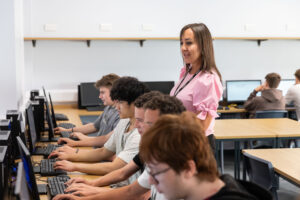
The aim of this course is to encourage students to interpret, analyse and apply digital concepts to solve problems and support decision-making in authentic workplace contexts.

Students will develop skills that allow them to critically evaluate analytical outputs, apply security controls, test system readiness and design user-focused digital solutions. Learning is delivered through applied activities in realistic, controlled or simulated digital environments, encouraging structured logical thinking, problem-solving and collaboration.

Students are encouraged to evaluate the impact of emerging technologies, such as automated and AI-enabled systems, while reflecting on ethical, legal and sustainability practices.

Assessment

Digital Systems and Data is assessed through a combination of core theoretical knowledge and applied work-related tasks. Assessments evaluate both conceptual understanding and practical execution across key operational areas:

  • Applied execution of data analysis, cyber security detection, system configuration or solution design
  • Conceptual understanding of digital system architecture, programming logic, fault diagnosis and governance

Consequently, the focus is on the ability to successfully interpret system requirements, apply technical controls and evaluate digital outputs critically and responsibly.

Skills and Careers Insight

Level 3 Digital Systems and Data provides you with critical thinking, analytical, logical and technical problem-solving skills as you explore system architectures, data analytics and cyber security protocols. You'll learn to prepare and analyze data, detect security threats, configure digital infrastructure and design structured solutions using low-code tools and programming logic, while communicating findings effectively to both technical and non-technical audiences. These transferable skills and professional workplace behaviours are highly valued across multiple sectors and support direct progression into higher education, degree apprenticeships or further specialised training in areas such as computing, IT support, data science, software development, cyber security and digital solution design. Whether you aim to become a data technician, cyber security specialist, IT support technician or software developer, this qualification offers a strong, applied foundation for a dynamic career in the evolving digital sector.

Labour Market Information

Subject Combination

Digital Systems and Data pairs brilliantly with Mathematics, Computer Science, Physics, and Business Studies. It complements theoretical computing and maths with practical data analytics, builds on physics hardware concepts, and mirrors business governance in real-world contexts—offering a strong foundation for tech degrees, apprenticeships, or digital careers.

Student Testimonials

What do our students think about studying here?

Computer science is a very interesting subject that helps you see and approach problems from new angles and challenges your creative and logical thinking abilities. Whether you have taken it at GCSE or it’s your first time experiencing computer science, it explores some really interesting topics and areas. It helps expand your understanding on things such as how the internals of a computer function or how the internet works. I find it to be incredibly enjoyable and one of my most interesting subjects.

Matthew Wheatley

Former DSFC Student from Park View

I think the best thing about Durham Sixth Form Centre is the fact that it’s a mature environment and it gives you the independence you need.

Sam Henig

Previous school - Wellfield School

I think Durham Sixth Form Centre is a perfect choice because the lessons are well planned and there is a brilliant balance between independent learning and support from all teachers.

Hannah Warwick

Previous school - Hermitage Academy

When I was in Year 11, the biggest worry for me was the transitional period between Year 11 and Year 12. But the support and the teachers made this so much smoother for me moving from my secondary school to Durham Sixth Form Centre.

Jenni Fairish

Previous school - Whitworth Park Academy

The atmosphere and quality of teaching at Durham Sixth Form Centre is very impressive and you can see a great deal of passion from the educators, which is something I believe is very important.

Logan Aitchinson

Previous school - Park View School

Even if you start Durham Sixth Form Centre with no idea where you’re going, you will get the opportunities to talk about your future and go through it and you’ll know what you’re doing later on.

Alice Robson

Previous school - Belmont School

Copyright © 2026 Durham Sixth Form