Geographical Association Lecturers
Durham Sixth Form Centre recently underscored its commitment to high-level academic enrichment by hosting two prestigious public lectures in collaboration with the Tyne & Wear branch of the Geographical Association. These events provided students and the local community with a unique window into the rigour of university-level research, featuring prominent academics from Durham University. For students, the sessions served as a vital bridge to higher education, offering not only a chance to build their UCAS personal statements and enrichment profiles but also a formal certificate of attendance from the GA to recognise their engagement with complex, global issues.

The first lecture, held in February, featured Professor Karen Lai, who challenged the audience to reconsider the “virtual” nature of our digital lives in her talk, ‘The Material Weight of the Cloud’. Moving beyond the abstract concept of digital data, Professor Lai detailed the physical reality of the massive, energy-intensive data centers that underpin platforms like Tik Tok and ChatGPT. The discussion highlighted a pressing geographical dilemma: the conflict between rapid digitisation and the global mandate for decarbonisation. By comparing the saturated hubs of London to emerging ‘AI Growth Zones’ in the North East, and drawing parallels with Singapore and Ireland, the lecture prompted a critical evaluation of whether these infrastructures bring genuine local prosperity or merely deplete regional power and water resources.
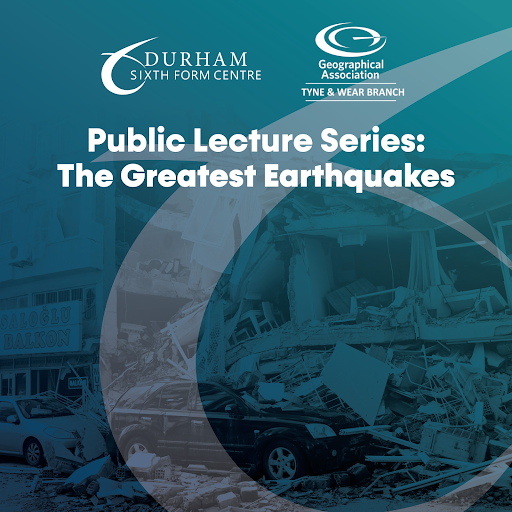
The second lecture shifted the focus from the digital landscape to the physical earth, as Dr. Simon Engelhart presented ‘The Greatest Earthquakes: Insights into Hazards from Seconds to Centuries’. Dr. Engelhart explored the devastating power of subduction zones – where tectonic plates collide – referencing historic M8+ events in Sumatra, Chile and Japan. The talk emphasised that the hazards of these ‘great earthquakes’ extend far beyond the initial tremors; they cause permanent land subsidence and sea-level shifts that redefine floodplains for decades. By examining two decades of research in the United States, the session illustrated how prehistoric records are essential for predicting future risks, especially as climate-driven sea-level rise compounds the threat of distant-source tsunamis.

We thank the Geographical Association for bringing such wonderful opportunities to Durham Sixth Form Centre and for the Geography department in their work in coordinating this.
Share Article